Regulating Hate: Speech Law and Dissent in Australia
At vero eos et accusamus
Lorem ipsum dolor sit amet, consectetur adipiscing elit, sed do eiusmod tempor incididunt ut labore et dolore magna aliqua. Ut enim ad minim veniam, quis nostrud exercitation ullamco laboris nisi ut aliquip ex ea commodo consequat. Duis aute irure dolor in reprehenderit in voluptate velit esse cillum dolore eu fugiat nulla pariatur. Excepteur sint occaecat cupidatat non proident, sunt in culpa qui officia deserunt mollit anim id est laborum.
A rapid increase in hate speech law and online controls is fast putting Australia at the vanguard of Western censorship
As part of a larger project to map Australia’s digital censorship regime, liber-net turned its attention to the country’s hate speech legislation, expecting to encounter existing work that summarised the state of affairs. However, we found no such overview had been produced in the past decade, and that there was so much legislation that we detoured from our larger project of mapping Australia’s digital censorship regime to create the report we are releasing today: Regulating Hate: Speech Law and Dissent in Australia.
Before the proliferation of legislation in recent years, Australia had a somewhat restrained civil law regime on hateful speech, and while egregious cases of activist lawfare were a recurring problem, weaponisation was limited even as civil law rapidly encompassed more protected attributes. The growing speech constraints Australians experience in the workplace and online also frequently stem from cultural and institutional vectors.
What has changed dramatically in recent years, however, is that Australia is fast expanding its civil speech regime into criminal law, purportedly as a means to tamp down social unrest and divisions in the wake of the October 7 Hamas attack and its fallout in Gaza, and the Bondi massacre.
In hasty response to these tensions, politicians have legislated new criminal offences, including bans on specific slogans and symbol bans, covering an increasing array of protected identities, and in several cases, dramatically lowered fault thresholds, removing the requirement of intent and replacing it with mere “recklessness.”
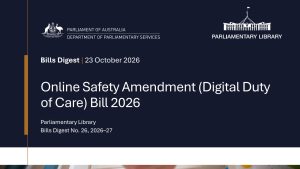
Australian police are not yet conducting mass home raids and arrests for tweets, as authorities frequently do in the UK and Germany. But the rapidly expanding criminal framework and flimsy speech protections (Australia has no bill or charter of rights guaranteeing free speech) make such a scenario increasingly possible, especially when combined with growing digital speech and surveillance controls under the eSafety Commission, including the currently proposed “Digital Duty of Care”.
Australia, it seems, is fast positioning itself at the very vanguard of speech repression in the West as politicians and authorities of all kinds come to be increasingly distrusted by the public.
While most of these new hate speech laws are untested, some have been quickly put to use. We have already seen pro-Palestine protesters charged in Queensland for chanting or displaying ‘from the river to the sea;’ a Queensland artist warned by police to take his artwork off the Internet for the same slogan; and two NSW men sentenced to 12 months’ imprisonment in NSW for making antisemitic statements at a rally and performing a Nazi salute. These laws apply equally online and offline, though the application thus far has primarily been in the offline sphere.
While these expressions are offensive to many, we argue that they should not be criminal offences, and that offensive speech is the price of a free society and flourishing pluralistic democracy. However, a key theme emerging from this report is that in fact, much of today’s political class views free speech as incompatible with a diverse, multicultural society.
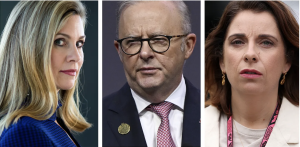
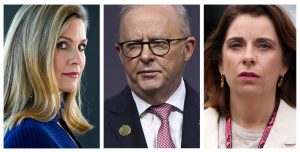
NSW Premier Chris Minns said his state’s new racial hatred laws were ‘very important to maintaining social cohesion;’ the Victorian Government says vilification ‘undermines Victoria’s social cohesion as a multicultural and inclusive society;’ and Attorney-General Michelle Rowland said new hate speech laws would ‘target those who seek to spread hatred and disrupt social cohesion in our community.’ In this way they Australian politicians more closely echo authoritarian rulers justifying their repression under the guise of preserving social harmony, rather than those of Western democracies. Essentially, they are saying that Australia’s multicultural project is too weak to survive without restricting free speech.
This signals a profound paradigm shift in the Australian psyche. Ask any government as little as a decade ago, and they would respond that free speech was a fundamental value of a multicultural democracy. We know this because Australia’s multicultural statements of 1989, 2003 and 2017 all named freedom of speech among the shared principles that hold a diverse society together. We argue for a return to this traditional view of free speech as a pillar of a flourishing democracy, and that it makes multicultural democracies stronger, not weaker, by addressing tensions in the open rather than driving them underground.
Other factors behind the recent push for hate speech legislation in Australia are crisis-driven decision-making, lobbying from a parade of special interest groups (both on the left and the right), and a shift in public opinion that prioritises safety over freedom.
In the context of the current Labor government’s previous attempt to regulate ‘misinformation’ online, and its new ‘harm-prevention’ legislation of a Digital Duty of Care, the picture forming is a Brave New (online) World where no one is ever harmed, offended or suffers hurt feelings, and where real-world violence is mitigated by micro-policing offensive speech.
It sounds utopian, but if sacrificing fundamental values and civil rights is the precondition, is it really a utopia after all?
liber-net’s key recommendations begin with enshrining Australians’ right to free speech in a bill or charter of rights in concert with a larger cultural shift; the experience of pandemic restrictions in Victoria, which has a Bill of Rights, shows that such documents are worthless without a strong culture of free speech, and leaders who defend it.
Criminal speech offences should be confined to intentional threats and incitement to violence, and all slogan bans should be repealed. The ‘equity escalation’ that has occurred ad hoc as minority groups jostle for vilification protections should be replaced with one narrow standard that protects all identities equally, not just select groups; any new speech offences should include sunset clauses to allow review of unintended impacts.
A full list of recommendations can be found at the end of the report. We note that we are not legal scholars, but investigative journalists and free speech advocates; however, several legal scholars reviewed the report before its release. If you find any errors, we welcome your feedback.
We hope this report provides a useful guide for policymakers, academics, advocates, and journalists who want to understand Australia’s legal landscape on hate speech. We urge our politicians to heed its warnings and to renew their commitment to free speech as a fundamental value of Australia’s multicultural society and to prevent Australia from going down the road of increasing repression, which merely bolsters the polarisation and populism they claim they are combating.
A larger liber-net investigation into Australia’s censorship regime will be released in Q1 of 2027.