Germany cannot censor its way out of its political reckoning
At vero eos et accusamus
Lorem ipsum dolor sit amet, consectetur adipiscing elit, sed do eiusmod tempor incididunt ut labore et dolore magna aliqua. Ut enim ad minim veniam, quis nostrud exercitation ullamco laboris nisi ut aliquip ex ea commodo consequat. Duis aute irure dolor in reprehenderit in voluptate velit esse cillum dolore eu fugiat nulla pariatur. Excepteur sint occaecat cupidatat non proident, sunt in culpa qui officia deserunt mollit anim id est laborum.
A massive win by Right-populist AfD is unlikely to result in the establishment changing course
Large-scale political discontent broke loose in the German state of Saxony-Anhalt last weekend, where the Right-populist Alternative für Deutschland achieved almost 44% of the vote, giving it 39 of the 42 seats necessary to govern.
The result is driven by a host of issues, among them mass migration, unpopular wars, cost of living, and economic decline. Tone-deaf legacy institutions that have treated citizens less as democratic participants than as problems to be managed were also key in the sweeping victory. Germany’s political establishment has been handed a message it can no longer plausibly dismiss, though it will likely attempt to do so.
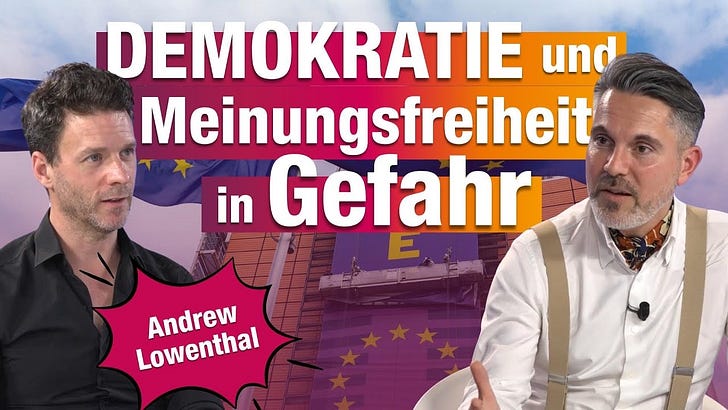
The kingmakers in this scenario are the Bündnis Sahra Wagenknecht (BSW), a left-populist party which has the votes to decide the final result. I was in Brussels this summer to appear on BSW co-leader MEP Fabio de Masi’s podcast to discuss the censorship network in Germany and across the West. That episode was released just the other week (see above).
In our recent investigation into Germany’s censorship network, we found an extensive ecosystem of national and supranational organizations, foundations, NGOs, and academic centres that monitor, police, and restrict political speech. This wide-scale censorship is another component of the populist backlash that is occurring in Germany and the West more broadly. Rather than taming populism, it inflames it.
Whatever one thinks of the AfD, this German state election should force a reckoning. Germany’s establishment cannot censor its way out of a crisis of legitimacy, though plenty will die trying.